Choosing the perfect dining table can transform your dining experience. For those seeking a space that fosters conversation and intimacy, a round dining table for six offers an unparalleled blend of style and functionality. This guide delves into the diverse world of round dining tables designed for six, exploring various dimensions, materials, styles, and considerations to help you find the ideal centerpiece for your home.
From classic wood designs to sleek modern metal pieces, the options are vast. We’ll navigate the intricacies of choosing the right size, considering seating arrangements, and understanding the long-term maintenance required for different materials. We’ll also explore pricing and purchasing options to guide you through the selection process.
Dimensions and Styles of Round Dining Tables for Six
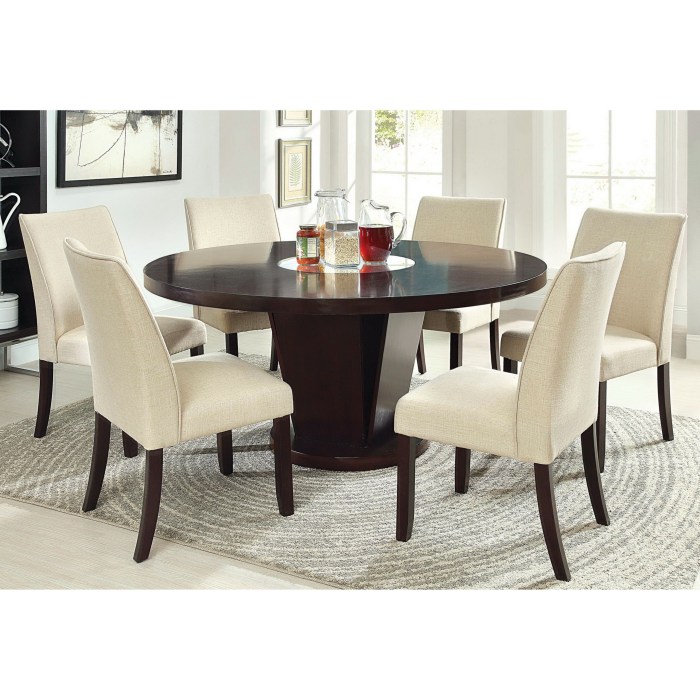
Choosing the right round dining table for six people involves considering both its dimensions and style to ensure comfort and aesthetic appeal within your dining space. The ideal size balances seating capacity with sufficient legroom and overall room flow. Different styles cater to various tastes and interior design schemes, influencing the overall look and feel of your dining area.
Standard dimensions for round dining tables seating six typically range from 48 to 60 inches in diameter. A 48-inch diameter table is suitable for tighter spaces, while a 60-inch diameter offers more generous seating and elbow room. However, consider the specific dimensions of your dining area and the size of your chairs to determine the most appropriate size. Allowing approximately 24 to 30 inches per person is generally recommended for comfortable dining.
Round Dining Table Styles
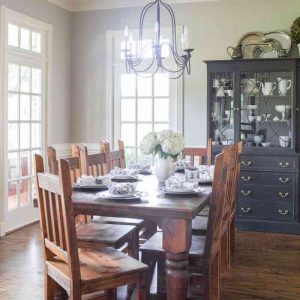
Round dining tables come in a wide variety of styles, reflecting diverse design preferences. Modern styles often feature clean lines, minimalist designs, and sleek materials like glass or metal. Traditional styles tend towards more ornate details, perhaps incorporating wood carvings or elaborate legs. Farmhouse styles evoke a rustic charm with distressed wood finishes and simpler designs. The choice depends on the overall aesthetic of your dining room and personal preferences.
Comparison of Round Dining Table Styles for Six
| Style | Diameter (inches) | Material Options | Design Characteristics |
|---|---|---|---|
| Modern | 48-54 | Glass, Metal, High-gloss wood | Clean lines, minimalist design, often pedestal base |
| Traditional | 54-60 | Solid wood (Mahogany, Oak, Cherry), possibly marble inlay | Ornate details, carved legs, potentially extended leaf option |
| Farmhouse | 48-54 | Reclaimed wood, painted wood, metal with wood top | Rustic finish, simple design, often trestle base or pedestal |
Materials and Finishes
Choosing the right materials and finishes for your round dining table for six is crucial, impacting both its aesthetic appeal and its longevity. The material significantly influences the table’s durability, maintenance requirements, and overall style, aligning with your personal preferences and the existing décor of your dining space. Careful consideration of these factors will ensure a beautiful and functional centerpiece for your dining area for years to come.The selection of materials for a round dining table for six encompasses a range of options, each with its unique properties.
Wood, metal, and glass are among the most popular choices, offering diverse aesthetic qualities and practical considerations. Understanding the advantages and disadvantages of each material is essential for making an informed decision.
Wood Table Materials
Wood remains a classic and highly sought-after material for dining tables. Its natural beauty, warmth, and versatility make it a popular choice for various interior design styles. Different wood types, such as oak, mahogany, cherry, and walnut, offer unique grain patterns, colors, and levels of durability. Hardwoods generally offer superior durability and resistance to scratches and dents compared to softer woods.
However, wood requires regular maintenance, including occasional polishing and potential refinishing over time to preserve its beauty and protect it from damage. Exposure to moisture or extreme temperature fluctuations can also negatively impact the wood’s integrity.
Metal Table Materials
Metal dining tables, often constructed from materials like steel, wrought iron, or aluminum, offer a contemporary and often industrial aesthetic. They are typically very durable and resistant to scratches and dents, making them a practical choice for households with children or pets. Metal tables are also relatively easy to clean and maintain, requiring only occasional wiping with a damp cloth.
However, metal can be susceptible to rust or corrosion if not properly treated or maintained, particularly in humid environments. Furthermore, the cold feel of metal might not be as inviting as the warmth of wood for some users. The weight of metal tables can also be a factor to consider, particularly when moving or rearranging furniture.
Glass Table Materials
Glass dining tables offer a sleek, modern aesthetic, creating a sense of openness and spaciousness in a dining area. Tempered glass, commonly used in furniture manufacturing, is significantly stronger and more resistant to breakage than regular glass. Glass tables are incredibly easy to clean and maintain, requiring only a simple wipe-down. However, glass is susceptible to scratches and chips, and fingerprints and smudges can be readily visible on its surface.
The reflective nature of glass can also make it less ideal for dining spaces with limited natural light.
Maintenance Requirements Comparison
Understanding the maintenance needs of each material is vital for making an informed decision. Here’s a comparison of the maintenance requirements for wood, metal, and glass dining tables:
- Wood: Requires regular dusting, occasional polishing with wood polish or oil, and potential refinishing every few years depending on usage and environmental conditions. Avoid placing hot items directly on the surface.
- Metal: Typically requires only occasional wiping with a damp cloth. Regular cleaning with a suitable metal cleaner can help prevent rust or corrosion. Avoid abrasive cleaners.
- Glass: Easy to clean with a damp cloth and glass cleaner. Regular cleaning helps prevent smudges and fingerprints. Avoid abrasive cleaners that can scratch the surface.
Seating Considerations
Selecting the right chairs is crucial for both comfort and the overall aesthetic of your dining area. The size and style of your chairs should complement your round table, ensuring a balanced and harmonious look. Careful consideration of these factors will significantly impact the dining experience.Chair style and size are inextricably linked to the functionality and visual appeal of a round dining table for six.
Oversized chairs can overcrowd a smaller table, while undersized chairs can look lost on a larger one. Similarly, the chair style should complement the table’s design; a rustic table might pair well with farmhouse-style chairs, while a modern table would benefit from sleek, contemporary designs. Finding the right balance creates a cohesive and inviting space.
Chair Styles and Table Style Compatibility
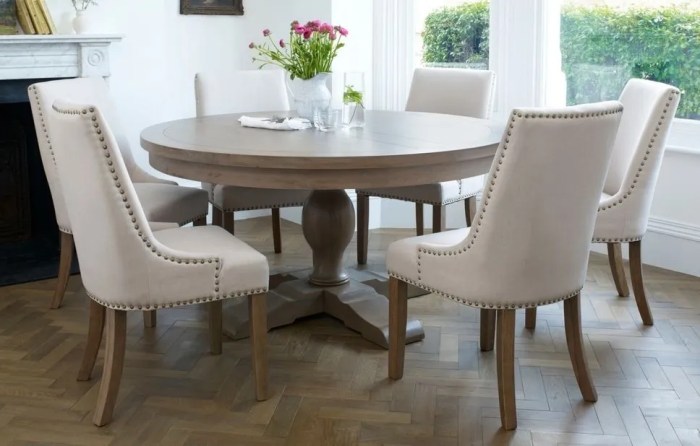
The selection of chairs should enhance the style of the round dining table. For instance, a classic, pedestal-based round table with a polished wood finish would be complemented beautifully by elegant, upholstered dining chairs with curved backs and tapered legs. These chairs could be in a neutral tone such as beige or grey to provide a sense of understated sophistication.
Conversely, a more modern round table with a minimalist design and a glass or metal top would pair well with chairs featuring clean lines, perhaps with a metal frame and a simple fabric seat. The contrast between the materials can create a visually striking and contemporary feel. A rustic round table crafted from reclaimed wood would be ideally suited to chairs made from similar materials, or perhaps chairs with a woven seat and a simple, sturdy frame.
The overall effect should be one of cohesive design.
Example Dining Setting
Imagine a six-person round dining table made of dark walnut wood with a simple, slightly tapered pedestal base. The table’s diameter is approximately 48 inches. Surrounding the table are six upholstered dining chairs in a light grey fabric. The chairs have a slightly curved back and tapered legs made of dark walnut wood, matching the table. A simple, woven rug in a neutral beige tone anchors the dining set, adding warmth and texture.
A centerpiece featuring a low arrangement of greenery and candles adds a touch of elegance and completes the overall aesthetic. The entire setting projects a feeling of relaxed sophistication and understated luxury. The consistent use of wood and the harmonious color palette creates a cohesive and inviting atmosphere.
Pricing and Purchasing Options
The cost of a round dining table for six can vary significantly depending on the materials used, the style, and the retailer. Understanding this price range and the different avenues for purchase will help you make an informed decision. Factors such as the type of wood (solid wood versus engineered wood), the presence of intricate detailing, and the quality of the finish all contribute to the final price.
Similarly, purchasing from a high-end furniture store will likely result in a higher price point than buying from a large online retailer.Purchasing options for round dining tables are plentiful, offering various levels of service and price points. Consumers can explore both online and brick-and-mortar stores to find the perfect fit for their needs and budget. Online retailers often offer a wider selection and price comparison tools, while physical stores allow for a hands-on experience and the opportunity to assess the quality of materials firsthand.
Price Ranges for Round Dining Tables for Six
Round dining tables for six can range in price from a few hundred dollars to several thousand. Budget-friendly options, often made from manufactured wood or with simpler designs, typically fall within the $300-$800 range. Mid-range tables, featuring higher-quality materials like solid wood with a more sophisticated design, can cost between $800 and $2,000. High-end tables, crafted from premium materials like solid walnut or cherry wood with intricate details and superior finishes, may exceed $2,000.
Where to Purchase Round Dining Tables for Six
Several avenues exist for purchasing a round dining table for six. Large online retailers such as Amazon, Wayfair, and Overstock offer a vast selection, often with competitive pricing and customer reviews. Specialty furniture stores, both online and offline, provide curated collections with personalized service and expert advice. Finally, local furniture stores and antique shops offer unique pieces and opportunities to support local businesses.
Each option presents different advantages and disadvantages in terms of selection, price, and customer service.
Comparison of Round Dining Tables for Six
| Retailer | Table Name | Price | Features |
|---|---|---|---|
| Wayfair | Simpleton Round Dining Table | $450 | Manufactured wood, simple design, light finish. |
| Pottery Barn | Artisan Round Dining Table | $1,500 | Solid oak wood, classic design, hand-rubbed finish. |
| Local Furniture Store (Example) | Custom-made Mahogany Table | $2,800 | Solid mahogany wood, custom size and finish, intricate detailing. |
Dining Room Integration
Integrating a round dining table for six into your dining room requires careful consideration of the space’s style, size, and existing décor. The circular shape offers unique design possibilities, impacting both the flow of the room and the overall aesthetic. A successful integration results in a harmonious and inviting space perfect for gatherings.Successfully incorporating a round dining table for six into various dining room styles hinges on thoughtful planning.
The table’s size and style must complement the room’s dimensions and existing design elements. A smaller, more delicate table might suit a cozy, cottage-style room, while a larger, more substantial table could anchor a spacious, modern dining area. Maintaining a balance between the table and the surrounding furniture is crucial to prevent the room from feeling cramped or unbalanced.
Lighting Considerations for Round Dining Tables
Appropriate lighting is key to enhancing the ambiance of a dining room featuring a round table. A central pendant light directly above the table creates a focal point and provides ample illumination for dining. Consider a chandelier for a more formal setting or a simple, sleek pendant for a contemporary space. Ambient lighting from wall sconces or floor lamps can soften the overall effect and create a more welcoming atmosphere.
Layered lighting—combining overhead, ambient, and task lighting—offers the most versatile and adaptable approach, catering to different moods and occasions. For instance, a dimmer switch on the pendant light allows for adjustments from bright, task-oriented illumination to a softer, more intimate glow for evening meals.
Color Schemes and Décor for Round Dining Rooms
The color palette and décor chosen for the dining room should complement the round table. A neutral-toned table, such as a light oak or white, provides a versatile backdrop that allows for flexibility in color schemes. Brighter, bolder colors can be introduced through the chairs, wall paint, or accessories. For instance, a white round table paired with navy blue chairs and a vibrant rug can create a striking yet cohesive look.
Conversely, a darker wood table might be best suited to a more muted color scheme, perhaps with cream or beige walls and subtle accents. The décor should also reflect the overall style—rustic elements for a farmhouse setting, modern art for a contemporary space, or antique accents for a traditional room.
Dining Room Design Featuring a Round Table for Six
Imagine a sun-drenched dining room with walls painted a soft, warm grey. A six-person round dining table crafted from reclaimed wood sits at the center, its warm tones contrasting beautifully with the cool grey walls. Six elegantly upholstered chairs in a deep teal surround the table, their plush fabric adding a touch of luxury. A simple, yet stylish, wrought-iron chandelier hangs above, casting a soft glow over the setting.
A large, patterned rug anchors the dining area, tying the color scheme together. A small sideboard against one wall displays carefully chosen tableware and decorative accents, further enhancing the room’s sophisticated yet relaxed ambiance. The circular shape of the table encourages conversation and creates a feeling of intimacy, making it the perfect centerpiece for this inviting and well-designed space.
Maintenance and Care
Proper maintenance is crucial for preserving the beauty and longevity of your round dining table. The specific care required will depend heavily on the material from which your table is constructed. Neglecting regular cleaning and preventative measures can lead to irreversible damage, significantly shortening the lifespan of your furniture. Understanding the best practices for your table’s material is key to ensuring it remains a cherished centerpiece of your dining room for years to come.Regular cleaning and preventative measures are essential for maintaining the beauty and extending the lifespan of your round dining table.
Different materials require different care approaches, and understanding these nuances is crucial for preserving your investment. Failing to address specific material needs can result in premature wear and tear, impacting both the aesthetics and structural integrity of the table.
Cleaning and Maintaining Different Table Materials
Wood, glass, metal, and stone are common materials used in round dining tables. Each material possesses unique properties requiring tailored cleaning and maintenance strategies. Wood, for example, is susceptible to water damage and scratches, while glass is prone to smudges and fingerprints. Metal tables may rust or tarnish, and stone tables can be susceptible to etching from acidic substances.
Understanding these vulnerabilities is paramount in establishing a proper maintenance routine.
- Wood: Regularly dust with a soft cloth. Use a wood cleaner specifically designed for your type of wood finish (e.g., oil-based, lacquer). Avoid excessive moisture. Treat scratches promptly with wood filler and refinish as needed. Use coasters under drinks to prevent water rings.
- Glass: Clean with a glass cleaner and a microfiber cloth. Avoid abrasive cleaners that can scratch the surface. Regularly wipe down to prevent smudges and fingerprints.
- Metal: Wipe clean with a damp cloth and mild soap. For tarnish, use a metal polish appropriate for the type of metal (e.g., brass, chrome, stainless steel). Protect from moisture to prevent rust.
- Stone: Clean with a damp cloth and mild soap. Avoid acidic cleaners, which can etch the stone. Use coasters under drinks to prevent staining.
Preventing Damage and Extending Lifespan
Preventing damage is far more effective and cost-efficient than repairing it. Simple preventative measures can significantly extend the life of your round dining table. This includes the use of protective measures like coasters and placemats, as well as the avoidance of harsh chemicals and abrasive cleaners. Regular maintenance and prompt attention to minor issues will prevent them from escalating into more significant problems.
- Use placemats and coasters to protect the surface from scratches and stains.
- Avoid placing hot dishes directly on the table; always use trivets or hot pads.
- Clean spills immediately to prevent staining or damage.
- Use furniture pads on the legs to protect your floor and prevent scratches.
- Avoid using abrasive cleaners or harsh chemicals.
Cleaning a Wooden Round Dining Table: A Step-by-Step Guide
Cleaning a wooden dining table requires a gentle approach to avoid damage. The steps Artikeld below will guide you through the process, ensuring your table remains clean and well-maintained. Always test any cleaning solution on an inconspicuous area first to check for reactions.
- Dust the table thoroughly with a soft, dry cloth or feather duster to remove loose dirt and debris.
- Prepare a cleaning solution: Mix a small amount of mild dish soap with warm water. Alternatively, use a commercially available wood cleaner appropriate for your finish.
- Dampen a clean, soft cloth with the cleaning solution. Do not saturate the cloth.
- Gently wipe the table surface in the direction of the wood grain.
- Immediately dry the surface with a clean, dry cloth, ensuring no moisture remains.
- Buff the table with a clean, dry cloth to restore shine and remove any remaining streaks.
Selecting a round dining table for six is a decision that blends aesthetics, practicality, and personal style. By carefully considering the factors Artikeld in this guide—from dimensions and materials to seating arrangements and maintenance—you can confidently choose a table that enhances your dining space and creates lasting memories for years to come. The perfect table awaits, ready to become the heart of your home.
Questions Often Asked
What is the ideal diameter for a round dining table for six?
Generally, a 48-inch to 54-inch diameter table comfortably seats six adults. However, consider chair size and personal preferences.
How do I protect a wooden round dining table from scratches?
Use placemats or coasters under plates and dishes. Consider using felt pads on the bottom of chairs to prevent scraping.
Can I extend a round dining table for six to accommodate more guests?
Some round tables offer leaf extensions to increase seating capacity. Check product specifications before purchasing.
What is the best way to clean a glass dining table?
Use a glass cleaner and a microfiber cloth for streak-free cleaning. Avoid abrasive cleaners.